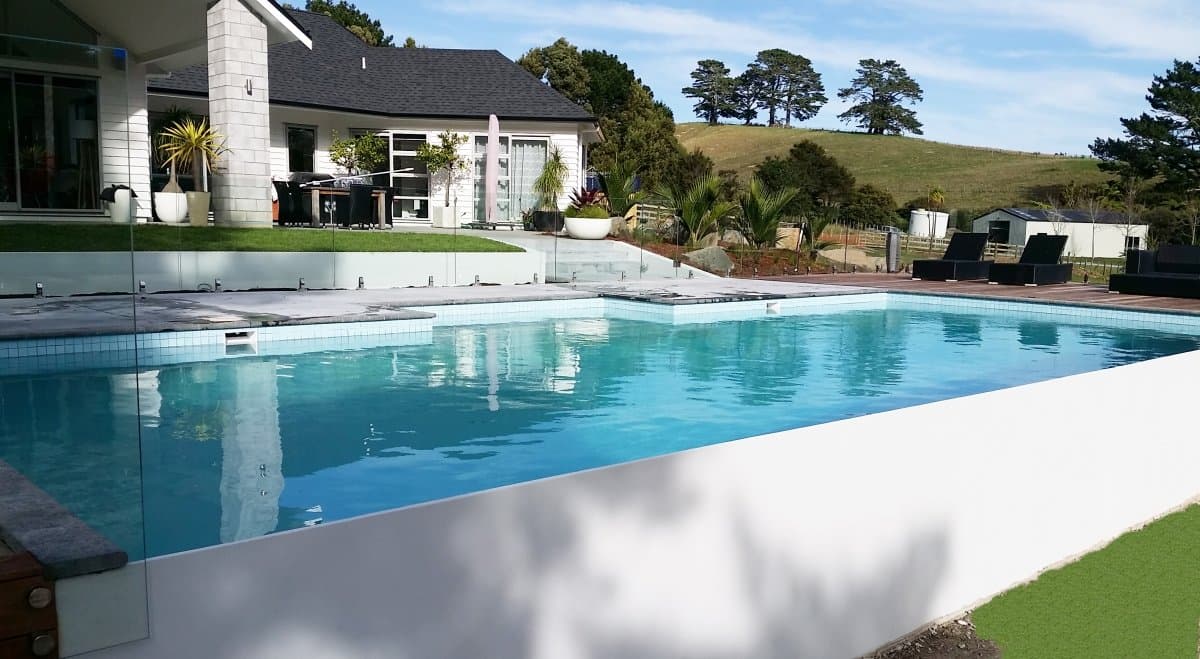
A swimming pool is a wonderful addition to any Auckland property, providing a place to relax, exercise, entertain and cool off during our warm summer months. But owning a pool also comes with the responsibility of maintenance. A well-maintained pool is clean, safe and inviting, while a neglected pool can become a breeding ground for bacteria, algae and mosquitoes.
This comprehensive guide covers everything Auckland pool owners need to know about pool maintenance, from daily tasks to seasonal care and troubleshooting common problems.
Understanding Pool Water Chemistry
Water chemistry is the foundation of pool maintenance. If your chemical levels are correct, most other maintenance tasks become much easier. If they are wrong, you will face constant battles with algae, cloudy water and surface damage.
pH is the most critical measurement. It indicates how acidic or alkaline your pool water is, on a scale of 0 to 14. The ideal range for a swimming pool is 7.2 to 7.6. If the pH is too low (acidic), it can corrode pool equipment and irritate skin and eyes. If the pH is too high (alkaline), it can cause scaling, cloudy water and reduce the effectiveness of chlorine.
In Auckland, where many pools are concrete with plaster finishes, the pH tends to drift upward over time. This means you will need to add acid (pH decreaser) regularly to keep the pH in range. Test your pH at least twice a week during summer.
Total alkalinity acts as a buffer for pH. The ideal range is 80 to 120 parts per million (ppm). If alkalinity is too low, your pH will bounce around erratically. If it is too high, it becomes difficult to adjust pH. Test alkalinity weekly.
Chlorine is the primary sanitiser for most pools. It kills bacteria, viruses and algae. The ideal free chlorine level is 1 to 3 ppm. In Auckland's summer temperatures, chlorine is consumed more quickly, so you may need to add chlorine daily or use a slow-release floater.
Calcium hardness measures the amount of dissolved calcium in the water. The ideal range is 200 to 400 ppm. Low calcium can cause the water to leach minerals from your pool surface, while high calcium can cause scaling. Test monthly.
Cyanuric acid (stabiliser) protects chlorine from UV degradation. The ideal level is 30 to 50 ppm. Without stabiliser, Auckland's strong summer sun can destroy chlorine within hours. Test at the start of each season.
Filtration and Circulation
Your pool's filtration system is the heart of its maintenance. A properly functioning filter removes debris, contaminants and micro-organisms from the water, keeping it clean and safe.
Run your pump for at least 6-8 hours per day during summer and 3-4 hours during winter. In Auckland's warm months, longer filtration cycles help maintain water quality. Consider running the pump during off-peak hours to save on electricity costs.
Sand filters are the most common type in Auckland pools. They are simple, reliable and require minimal maintenance. Backwash the filter when the pressure gauge reads 8-10 psi above the normal operating pressure, typically every 2-4 weeks during summer.
Cartridge filters provide finer filtration than sand but require more frequent cleaning. Remove and hose down the cartridge every 2-4 weeks and deep clean with a cartridge cleaner every 3-6 months.
Glass media is an upgrade from traditional sand that provides better filtration and lasts longer. If you are due for a sand change, consider upgrading to glass media.
Cleaning and Skimming
Even with good filtration, physical cleaning is necessary to keep your pool looking its best.
Skimming removes leaves, insects and other floating debris from the surface. In Auckland, where many properties have mature trees, skimming may be needed daily during autumn. Use a long-handled skimmer net to remove debris before it sinks and decomposes.
Vacuuming removes debris that has settled on the pool floor. You can use a manual vacuum head attached to a telescopic pole, or an automatic pool cleaner. Robotic cleaners are increasingly popular in Auckland as they are energy-efficient and require minimal supervision.
Brushing the pool walls and floor prevents algae buildup and removes dirt that vacuuming may miss. Brush at least weekly, paying particular attention to corners, steps and other areas with poor circulation. For concrete pools with plaster or pebble finishes, use a stiff nylon brush. For fibreglass or tiled pools, use a softer brush.
Empty skimmer and pump baskets regularly. A full basket restricts water flow, reducing filtration efficiency and potentially damaging the pump. Check baskets daily during summer and every few days during winter.
Seasonal Maintenance
Auckland's seasons require different maintenance approaches.
Spring is the time to prepare your pool for summer. Remove the winter cover if you use one, test and adjust water chemistry, inspect equipment for any winter damage, and give the pool a thorough clean. Consider a professional service to check your pump, filter and heater before the busy season.
Summer is peak pool season. Test water chemistry twice weekly, add chlorine as needed, backwash the filter regularly and skim daily. The warm temperatures and increased usage mean your pool needs the most attention during this period.
Autumn brings falling leaves and cooler temperatures. Increase skimming frequency, reduce pump running time as temperatures drop, and consider using a leaf cover. Test water chemistry weekly.
Winter is the quietest time for pool maintenance, but do not neglect your pool entirely. Reduce pump running time to 3-4 hours, maintain a low chlorine level, and test chemistry monthly. If you do not use your pool in winter, a winter cover can significantly reduce maintenance requirements.
Common Pool Problems and Solutions
Green water is the most common problem Auckland pool owners face. It is caused by algae growth, which occurs when chlorine levels are too low or circulation is inadequate. To fix green water, test and adjust pH, add a large dose of chlorine (shock treatment), run the pump continuously for 24-48 hours, brush the walls and floor, and vacuum the dead algae after it settles.
Cloudy water can be caused by poor filtration, high pH, low chlorine or high calcium levels. Check and clean your filter, test and adjust chemistry, and consider using a clarifier to help small particles clump together for easier filtration.
Staining on pool surfaces can be caused by metals in the water (iron, copper, manganese), organic matter or calcium scaling. Identify the type of stain before treating it. Metal stains require a metal sequestrant, organic stains can be treated with chlorine, and calcium scaling requires an acid wash.
High chlorine smell is actually caused by chloramines, which form when chlorine combines with contaminants in the water. The solution is to shock the pool to break down the chloramines and restore free chlorine levels.
Skin or eye irritation is usually caused by incorrect pH or insufficient chlorine. Test your water and adjust as needed. The ideal pH for swimmer comfort is 7.4 to 7.6.
Professional Maintenance vs DIY
Many pool maintenance tasks can be handled by homeowners, but professional servicing has its place. Consider hiring a professional for:
Annual equipment servicing, including pump and filter inspection, heater servicing and electrical safety checks. Opening and closing the pool for the season, particularly if you are unsure about chemical balancing. Stain diagnosis and treatment, as incorrect treatment can make stains worse. Major repairs or equipment replacement.
At Pacific Pools, we offer maintenance plans for Auckland pool owners. Our experienced technicians can handle everything from weekly cleaning to equipment repairs, leaving you free to enjoy your pool without the hassle.
Safety Considerations
Pool safety is a critical aspect of ownership. In New Zealand, all pools must be fenced in accordance with the Building Act. Check your fence regularly for gaps, damage or self-closing gate issues.
Never leave children unattended near a pool, even for a moment. Consider installing a pool alarm for additional safety. Keep rescue equipment, such as a life ring or reaching pole, near the pool at all times.
Store pool chemicals safely, out of reach of children and in a dry, well-ventilated area. Never mix different chemicals together, as this can cause dangerous reactions.
By following this maintenance guide, you can keep your Auckland pool sparkling clean, safe and ready to enjoy throughout the year. Regular maintenance is an investment in your property and your family's enjoyment, ensuring your pool remains a source of pleasure rather than a burden.